What is vacuum therapy?
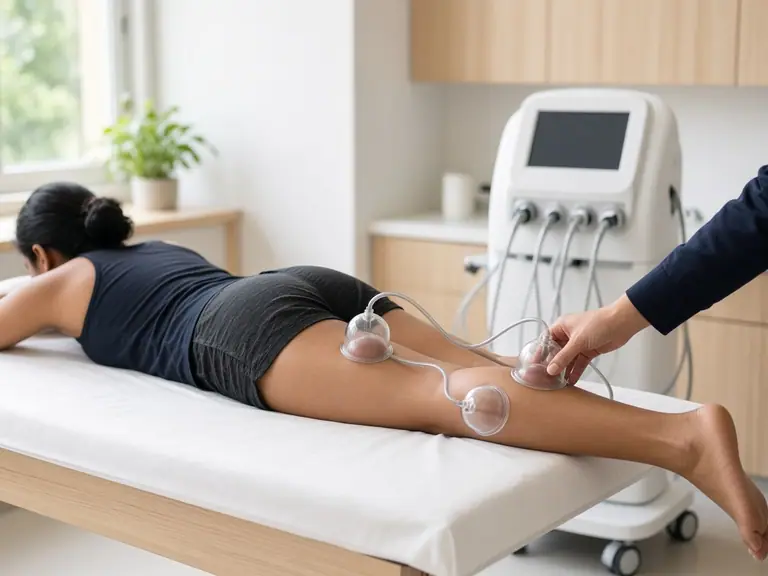
Vacuum therapy uses a machine to deliver precisely controlled, rhythmic suction. Compared with traditional cupping it allows us to fine-tune pressure and move smoothly over larger areas, making it ideal for deep muscle tension and swelling.
It is frequently used after sports injuries and surgery to encourage lymphatic drainage and restore tissue mobility, always as one part of a structured rehabilitation plan.
Benefits
- Reduces swelling and fluid retention
- Relieves deep muscle tension
- Improves circulation and tissue healing
- Precise, adjustable pressure
- Comfortable and non-invasive
Commonly treated
- Post-operative swelling
- Sports muscle fatigue
- Chronic muscle tightness
- Fascial restrictions
- Back and thigh tension
- Scar tissue stiffness
What to expect at your visit
- 1
Assessment
History, posture, movement and strength testing to pinpoint the cause.
- 2
Treatment
Hands-on therapy and techniques chosen specifically for your problem.
- 3
Exercise plan
Simple, targeted exercises so progress continues between sessions.
Vacuum Therapy FAQs
How is vacuum therapy different from cupping?
Vacuum therapy uses a machine to control suction precisely and can pulse or glide over tissue, while cupping uses static cups. We choose whichever suits your condition best.
How long is a vacuum therapy session?
The vacuum therapy component usually takes 10 to 20 minutes within a regular physiotherapy session.
Who should avoid vacuum therapy?
It is not suitable over open wounds, active infections, blood clots or for people on certain blood thinners. We screen every patient first.